Moon Boot Services
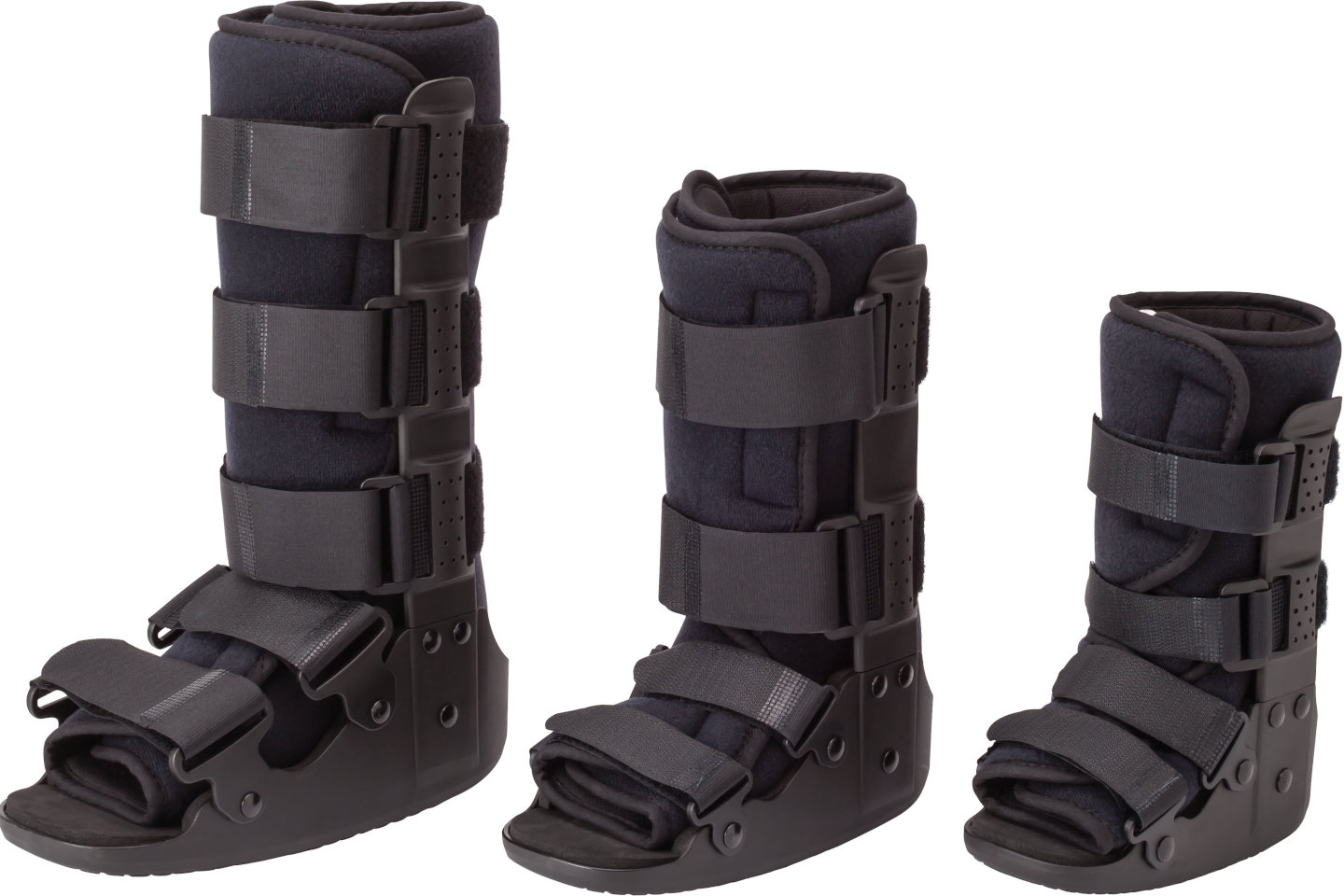
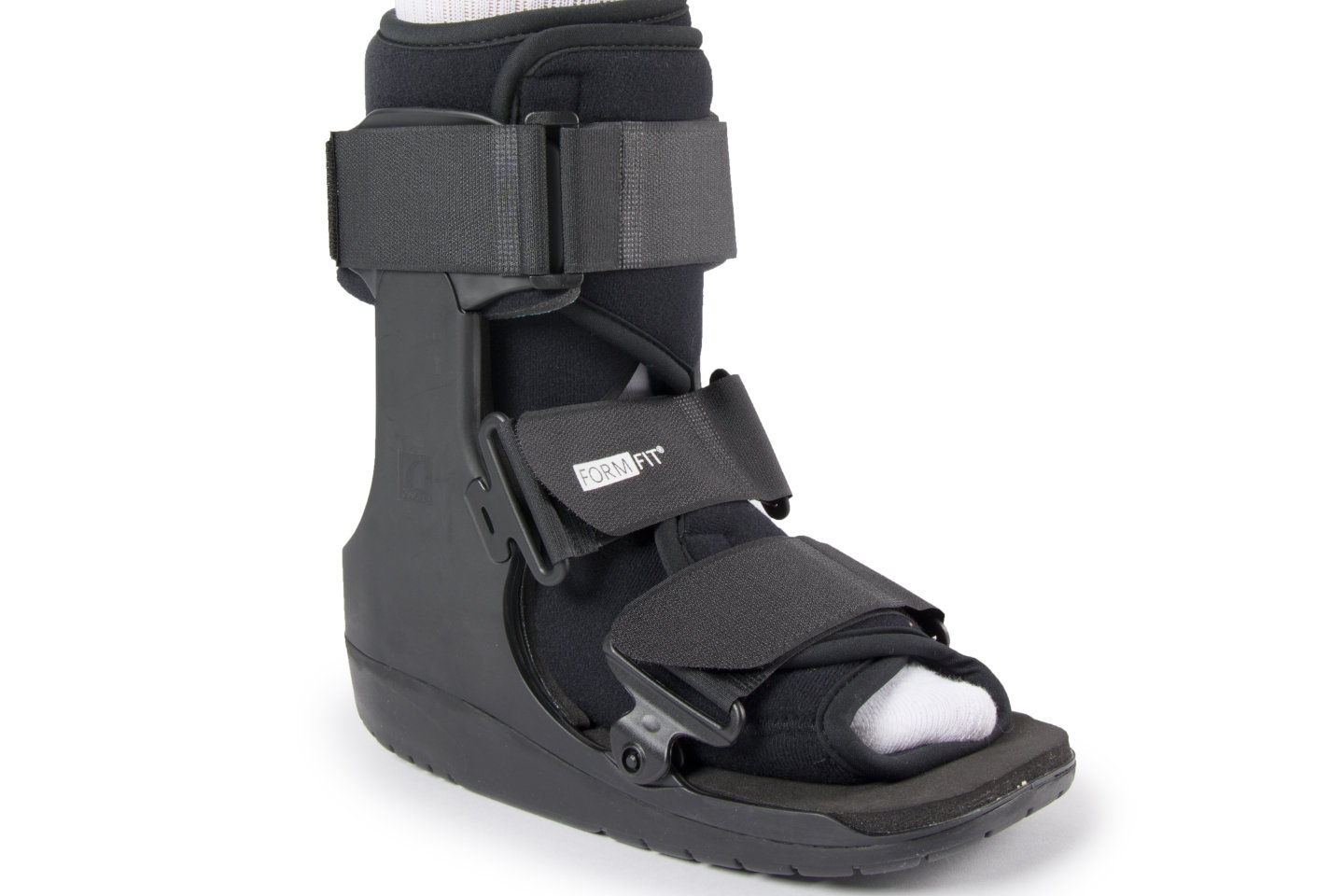
A Moon Boot, also known as a CAM boot, is a carefully designed orthosis which serves to secure the foot and ankle and aid in rehabilitating certain injuries.
Orthotics Plus provides acute lower-limb rehabilitation services, including moon boot purchases (with warranty), fitting and ongoing Orthotic services.
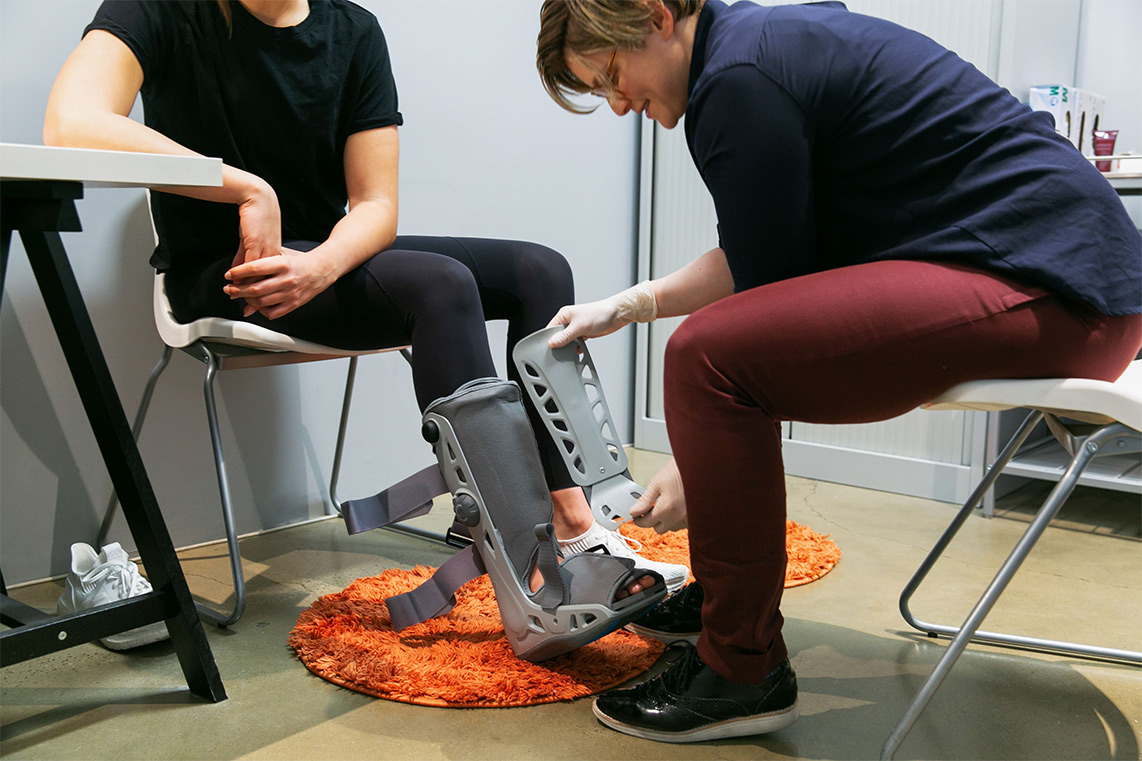
What Conditions Require a Moon Boot?
Moon boots / CAM boots can be appropriate for a range of injuries or conditions that affect the lower limb. The majority of injuries are caused by trauma (i.e. a fall). These injuries commonly include:
- Ankle fractures (i.e. distal fibula fracture)
- Talus fractures
- Calcaneal fractures
- Stress fractures
- Fifth metatarsal fractures
- Navicular fractures
- Cuboid fractures
- Tibialis posterior dysfunction
- Tendon rupture or disruption
- Toe fractures
- Lateral ligament injury (i.e. sprained ankle)
- Achilles tendon rupture
Moon boots may also be appropriate in cases of skeletal deformities, necrosis, osteoporosis and other complex conditions which Orthotics Plus is experienced with.
How a Moon Boot Works
A moon boot provides immobilisation which is beneficial for the long physiological process of skeletal reconstruction. The moon boot immobilises the body-part in place at an appropriate angle and allows the injury to heal.
Healing of the bone is a complex process which can be simplified as four primary stages:
Stage 1
This is the inflammatory phase, during which there is acute damage and bleeding
Stage 2
This is the formation of a callus. During this stage, the bone is quite soft and so the injury is vulnerable. It is important to brace the affected area adequately through this stage.
Stage 3
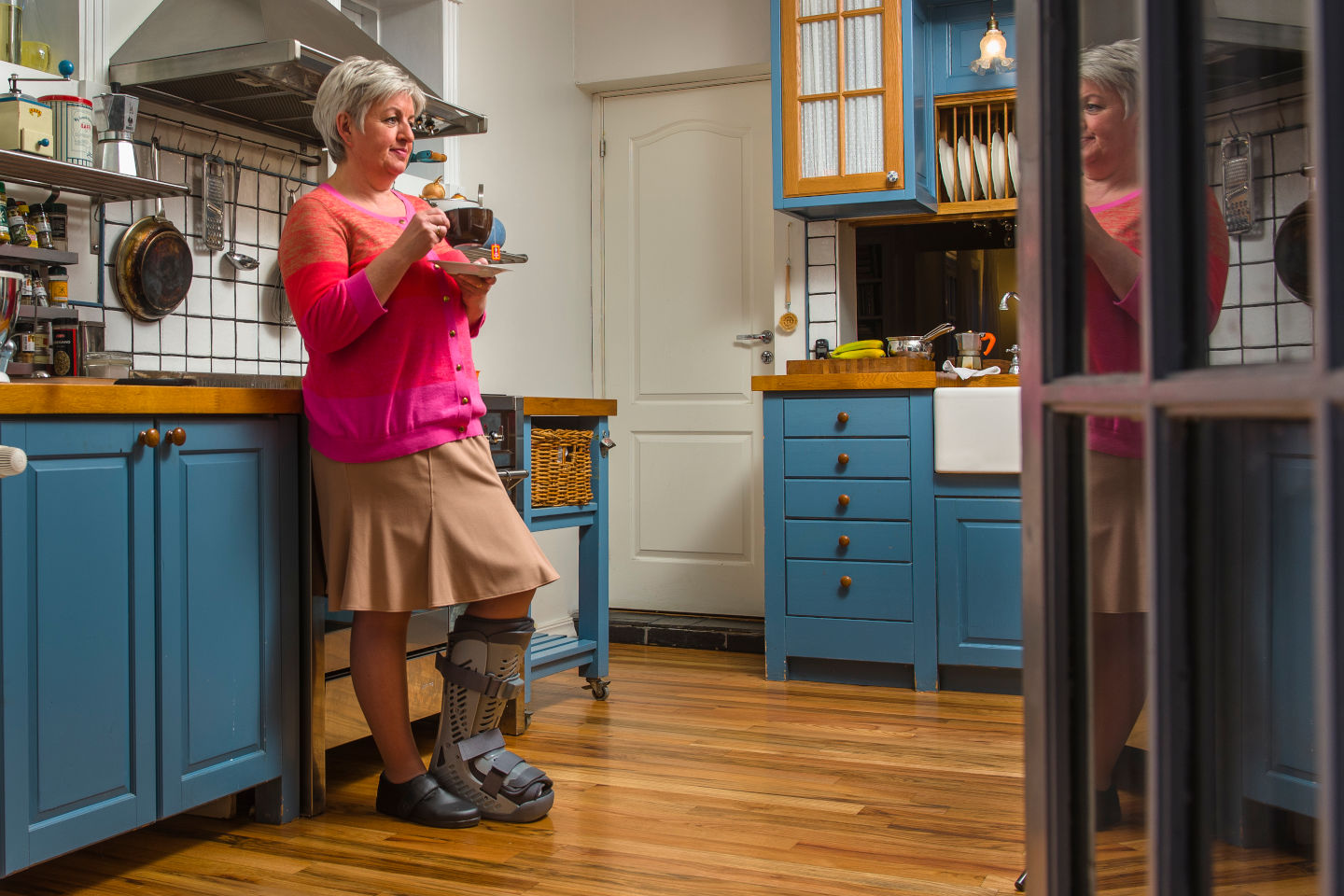
This is the formation of bony callus. During this stage it is important not to put too much force through the bone as it heals
Stage 4

This is known as the remodelling stage, during which the bone recovers and slowly returns to or near its previous strength and is more tolerable to movement.
It is important to respect each of these stages to avoid limiting the recovery or creating a lasting deformity in the bone. Your Orthotist will guide you on this.
The healing process would generally take about six weeks, depending upon the exact nature of the injury, and assuming the regeneration process is not compromised by other factors.
Moon Boot for Injury Recovery and Support
A moon boot is a specialised walking boot designed to protect and support the foot, ankle, or lower leg following injury or surgery. In Australia, moon boots are commonly used to manage conditions such as sprained ankles, ligament damage, ankle fractures and foot fractures while allowing controlled movement and early mobility.
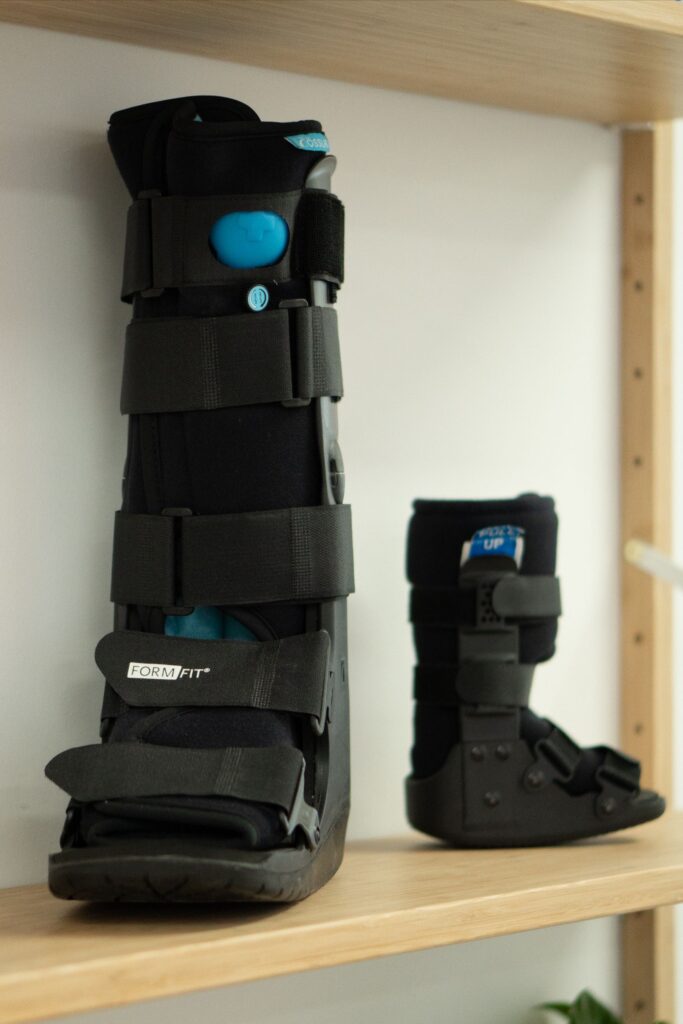
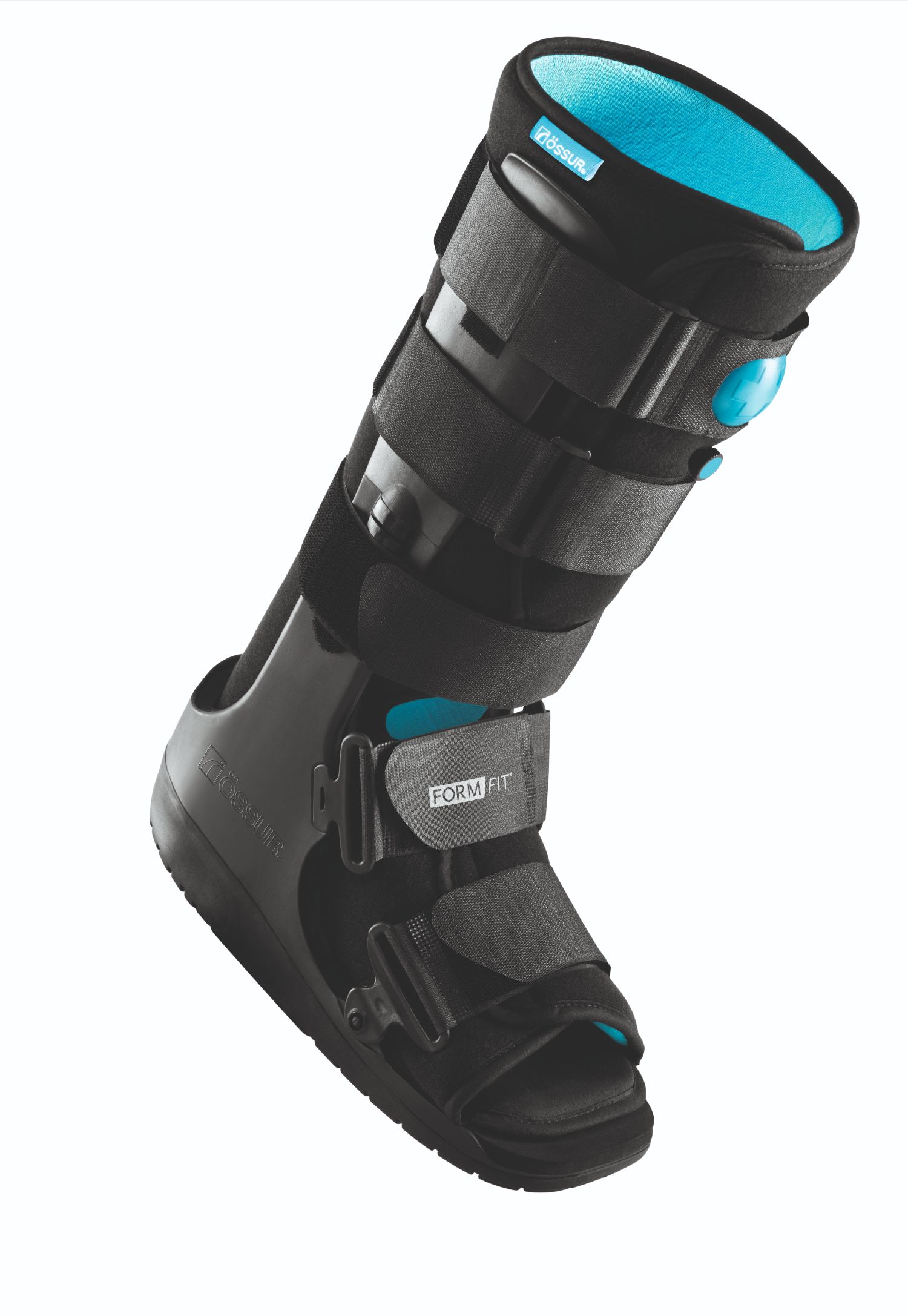
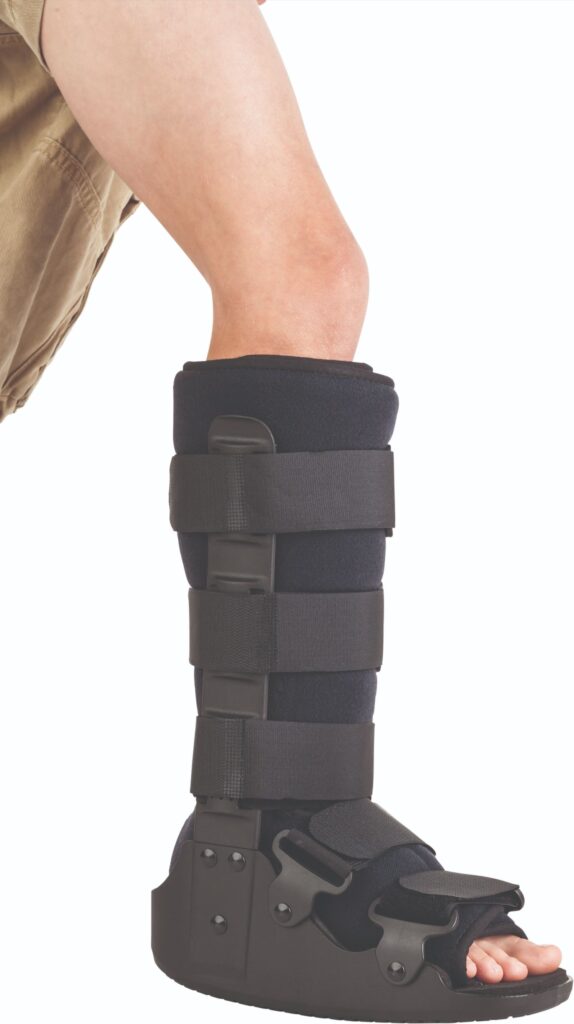
Moon boots differ from traditional cast immobilisation by offering adjustable support. Types of moon boots include high‑top designs that enclose the lower leg and ankle, low‑top versions for toe injuries, and pneumatic models that allow air pressure adjustment for comfort, fit and compression.
Benefits of a Moon Boot
Using a moon boot offers several advantages over a solid cast:
- Support and Protection: A moon boot for ligament damage or a sprained ankle helps stabilise soft tissues while walking.
- Comfort and Adjustability: Air‑adjustable or padded models improve comfort and can be loosened or tightened according to swelling.
- Improved Mobility: Unlike plaster casts, moon boots allow controlled walking, helping maintain daily activity levels.
- Hygiene: Moon boots can be removed for bathing or wound care, which supports hygiene and skin health.
- Reduced Muscle Loss: Allowing gentle movement while protecting the injured area can help prevent muscle atrophy.
This combination of comfort and function makes a moon boot a good option for many recovery plans.

The Fitting Process
Clinical Assessment
A qualified clinician reviews your injury, medical history, and walking ability. This assessment determines whether a moon boot is suitable for your needs and whether high‑top, low‑top, or pneumatic features will benefit you.
Measurement and Fitting
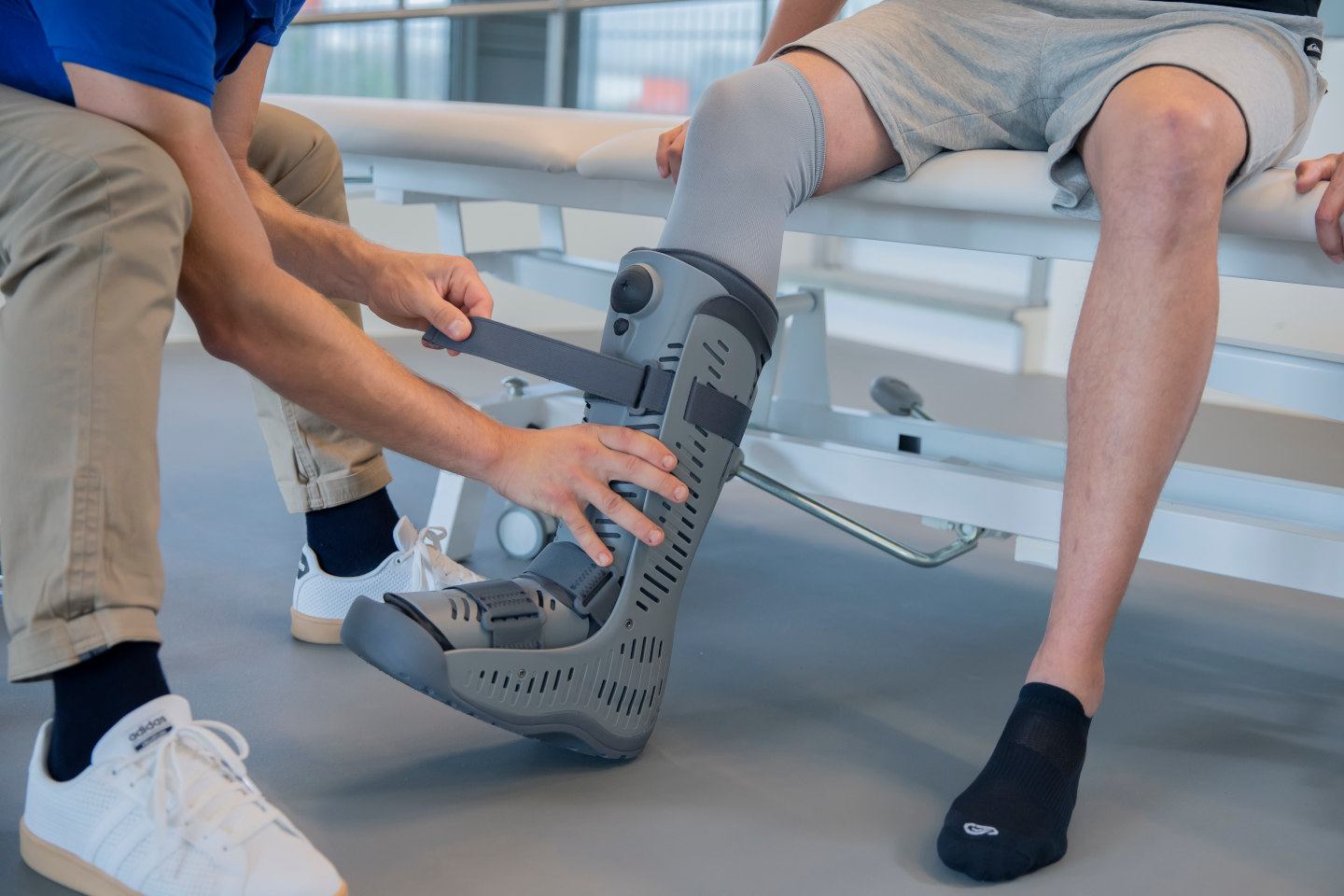
Your clinician measures the injured limb and selects a boot size that supports alignment and comfort. The moon boot is applied in the clinic, and you are shown how to adjust straps or pneumatic features.
Instructions for Use
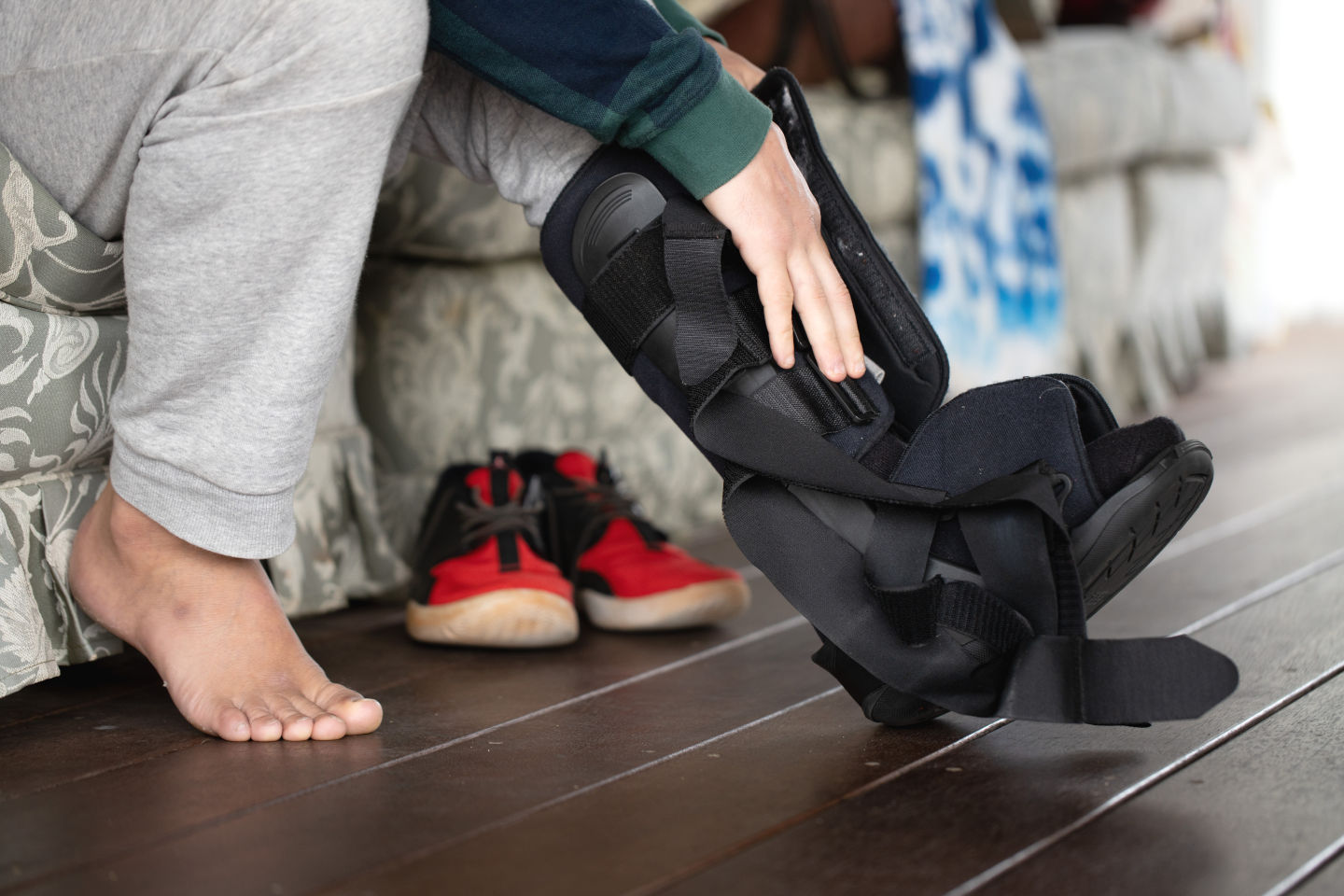
Your clinician shows you how to put on and remove the moon boot safely. You receive guidance on weight distribution, walking patterns, and any activity limitations during your recovery.
Follow‑Up
Follow‑up consultations check comfort and fit as your condition changes. Adjustments may be made to improve performance or accommodate swelling reduction.
What Is Included
- Clinical assessment by experienced orthotists or trained clinicians
- On‑site fitting and adjustment of the moon boot
- Instruction on safe application and use
- Follow‑up visits to monitor healing and fit if required
Exclusions:
Moon boot accessoriesand specialised padding or replacement liners may involve additional costs.
Pricing and Support Options
Moon boot prices vary by model and features. A basic moon boot for ankle injury may start at a lower range, while pneumatic or advanced models designed for more complex support may cost more. Your clinician provides a quote after assessment.
Funding and payment options include:
- Private health insurance extras cover
- TAC funding for transport injury cases
- WorkCover for workplace injury claims
- NDIS support for eligible participants
Our administrative staff assist with claim forms and documentation.

Locations and Availability
Moon boot fittings and assessments are available in Melbourne through clinics in:
Appointments can be booked online or by phone. Telehealth consultations are offered for initial screening or follow‑up checks when an in‑person visit is not required.

Choosing the Correct Moon Boot
It is important to have an Orthotist involved with selecting and fitting a moon boot properly. There are several reasons for this:
- The wrong moon boot/fitting can cause referred pain in other parts of the body, namely lower back pain
- There are different types of moon boots with different characteristics for different situations (for example the VACOped boot with special vacuum technology is ideal for Achilles ruptures)
- Not all moon boots are high-quality products, we do not recommend people purchase moon boots from the internet, for example
Please note that industry best practice indicates that it is not appropriate to hire a moon boot (according to Therapeutic Goods Administration (TGA), Department of Health, Australia).
Each boot needs to be selected and carefully fitted for the individual.
Starting with Orthotics Plus
Clients do not require a referral to get started with Orthotics Plus. We do, however, often have patients who are referred to us by their GP. When requiring a moon boot, details of an existing diagnosis from a doctor, surgeon or specialist are helpful.
If someone has sustained an injury, Orthotics Plus is generally involved quite early in the process. We aim to facilitate same-day appointments whenever appropriate so that the client can have the support of the moon boot as early as possible.
When a moon boot is prescribed, we can also supply and fit the boot on the spot, we have an inventory of equipment at our clinics.
Follow up support will include subsequent appointments with our team, which generally take place within three to four weeks. This will depend upon the individual and the nature of their injury.
In cases of complex injury, we often work in conjunction with GPs or Orthopaedic Surgeons. We also make recommendations to GPs, Physiotherapists, specialists as well as x-rays or imaging that may be required.
Arrange a Consultation
If you need support following a sprained ankle, ligament injury, or lower limb trauma, book an assessment to explore whether a moon boot suits your recovery plan. A clinician will assess your condition and recommend the best device for support and walking comfort.

Moon Boot FAQ
Compared to a cast, a moon boot is considered a modern, comfortable option, it has two primary benefits over a cast:
- It allows the patient to weight-bear on the affected leg
- It can be removed easily as needed (i.e. for showering and cleaning)
Please note, people may be suitable for a moon boot may not be suitable for a cast and vice versa. So there are different indications at times.
At Orthotics Plus our staff can provide expert guidance on which moon boot is the most appropriate. We also take the time to fit the boot properly, which is very important.
We support our clients with information so that they can feel comfortable and confident throughout their recovery.
We also have well-established relationships with specialists so that we can connect our clients to other experts swiftly whenever this is appropriate.
Our experience and expertise, together with our holistic and compassionate approach, means we provide a very high standard of care to all our clients.
Please use our referrals page or contact us to get started.
At Orthotics Plus whenever we fit a client with a moon boot we also educate them as to how to best use the boot.
This will include written information about:
- How often (or for how long) they need to wear it (this will depend upon the nature of their injury)
- Whether they need to wear it overnight
- How to remove it and refit it around activities such as showering
- How much weight they can put on it
- Information about any gait aids that may be relevant
We also discuss how to walk comfortably while wearing the boot. This includes guidance on how to establish a good heel to toe rolling motion for each step. This motion promotes an even distribution of pressure across the foot while walking.
We often suggest wearing a chunky-soled shoe on the contralateral side. We can also arrange for a device called an even-up, which slips over the other shoe in order to better align the client’s hips and even out their gait.
We will often fine-tune a moon boot fitting with the application of heel wedges into the opposite shoe, to ensure the hips are level and walking is as natural as possible.
Washing the moon boot is not recommended because the internal liner is set up in the correct position for the client.
We recommend wearing a sock underneath the boot so that the boot itself stays clean and will often provide patients with several stockings at no extra cost.
It depends on your injury.
While Moon Boots are designed to allow walking, that doesn’t mean it’s always safe to do so straight away.
Most people can physically walk while wearing a Moon Boot, but whether you should depends on your injury.
Your GP, surgeon or specialist and clinician will guide you on this.
Some injuries require a strict non-weight bearing period, while others allow light walking early in recovery.
(Although Moon Boots make walking possible, their main purpose is to immobilise the foot or ankle while it heals. Even if you can’t walk at first, the boot prepares you for when that stage of rehab begins.
Most severe injuries require a few weeks of complete rest from walking. For example, someone with surgical screws or plates usually need 4–6 weeks of non-weight bearing time before using the boot to walk).
Yes.
You can sleep in your Moon Boot.
Many people find it more comfortable with a pillow between their knees.
You may loosen the straps slightly overnight, but ensure they’re retightened before standing up in the morning.
Using an old pillow cover over the top of the Moon boot can be done for hygiene reasons if you are worried about the sole of the boot getting the bed dirty.
Moon boots are used for sprained ankles, ankle frcatures, ligament damage, mild foot fractures, and post‑operative protection when controlled walking is needed.
Wear time depends on the injury and healing progress. Your referring doctor or specialist will advise based on your recovery plan.
Yes. A moon boot is designed to allow controlled walking while protecting the injured area.
Wipe the boot’s interior and exterior with mild soap and water. Allow it to dry fully before reuse. We also recommend the use of a sock to keep the liner and the boot clean.
Contact your clinic for an adjustment. Strap tightening or padding changes often improve comfort. Sometimes a re-fit of the boot is required.
Avoid high‑impact activities and situations where rapid movements or uneven surfaces may increase strain on the injured area.